Allegro

An insurtech SaaS solution to improve a broker’s workflow

Overview

Role: UX Designer
Team: Product Manager, Frontend Engineer, Backend Engineer, Insurance Manager, and Data Engineer
Duration: October 2023 - February 2023
Status: Shipped
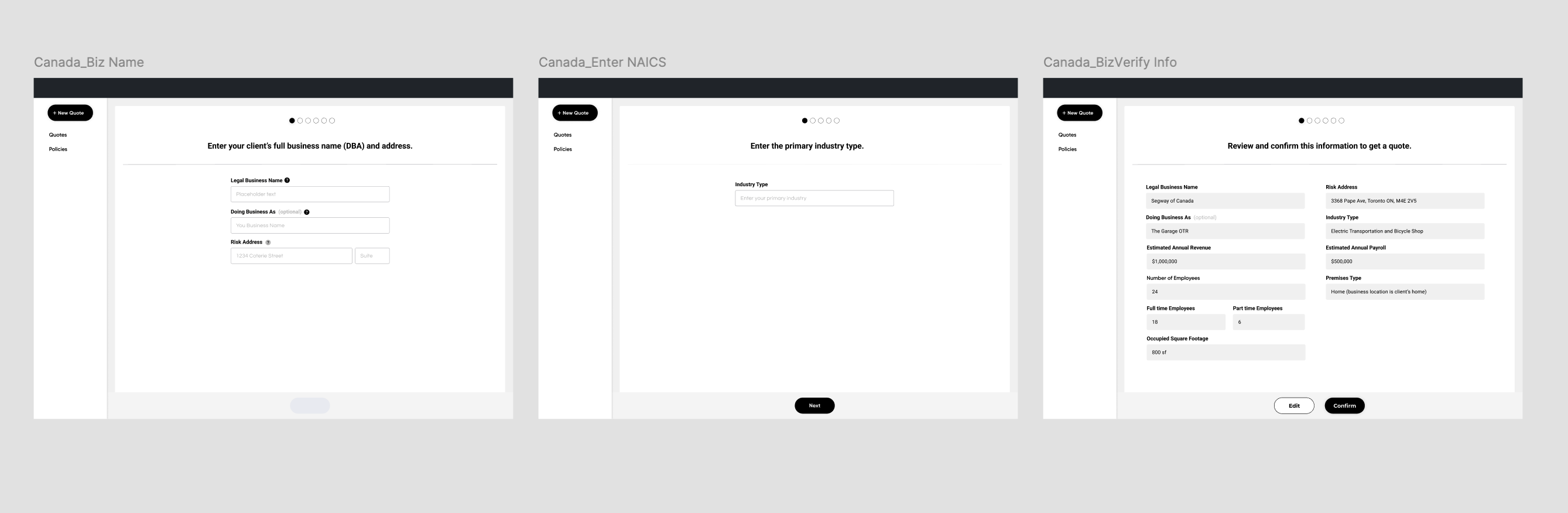
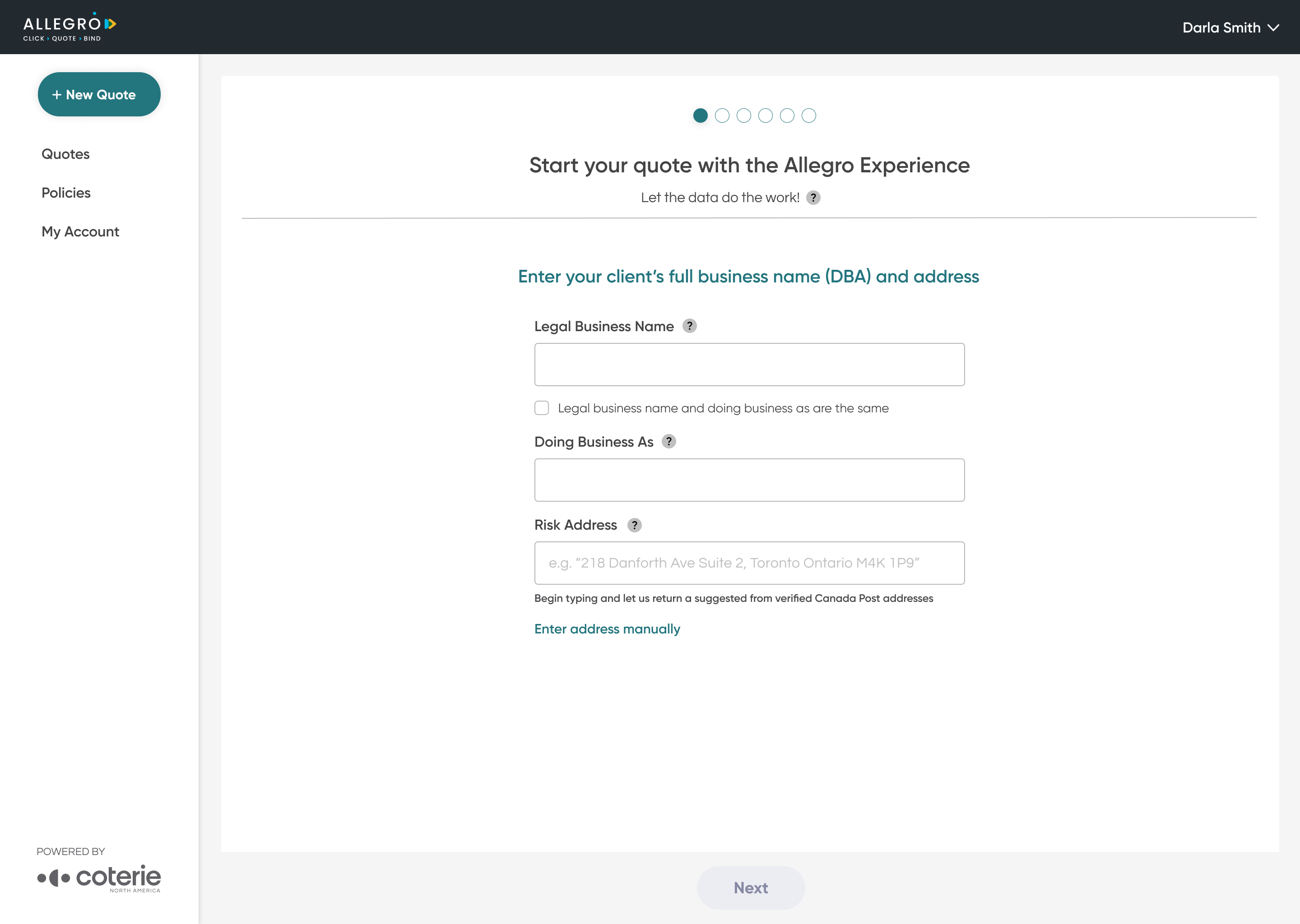
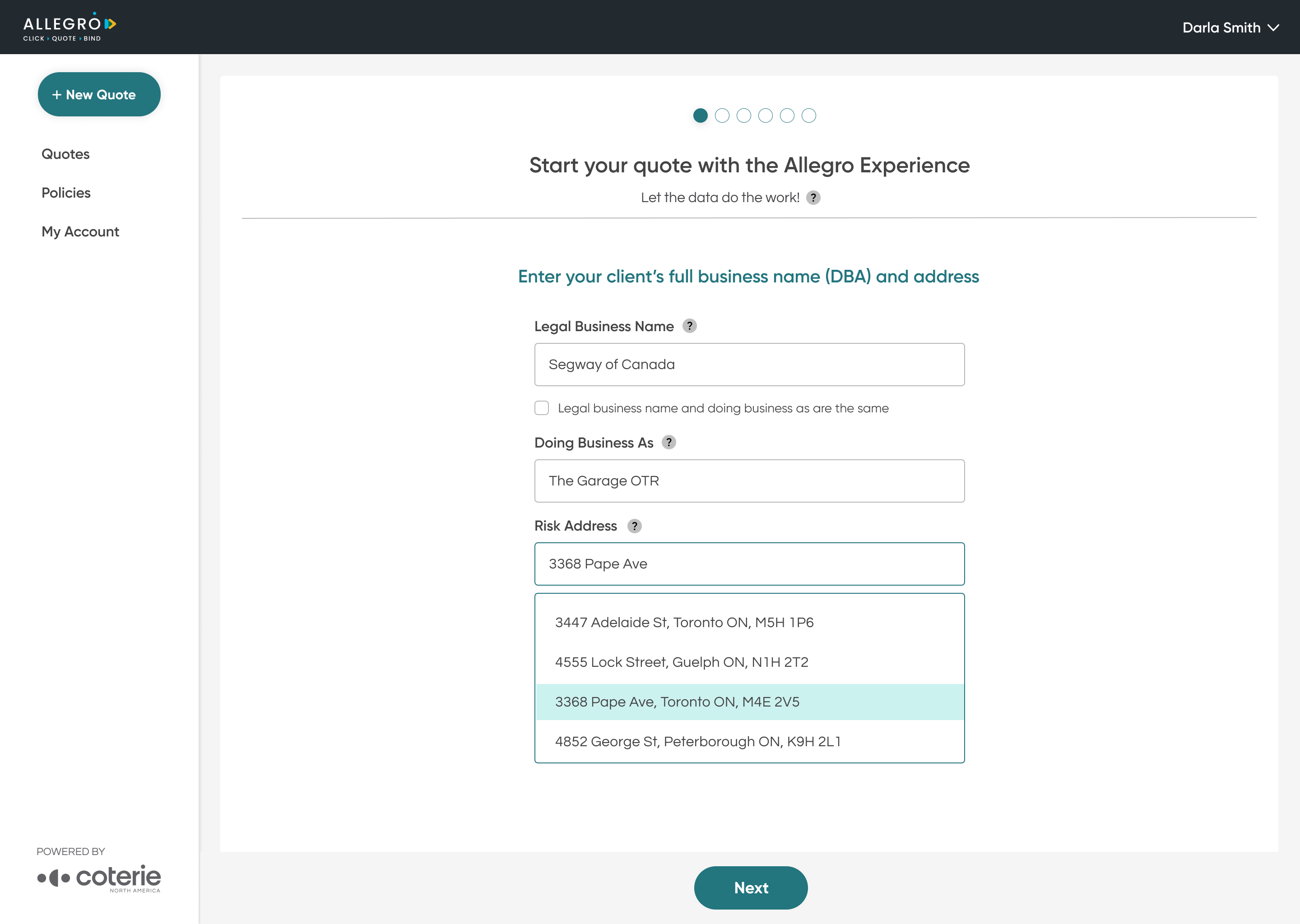
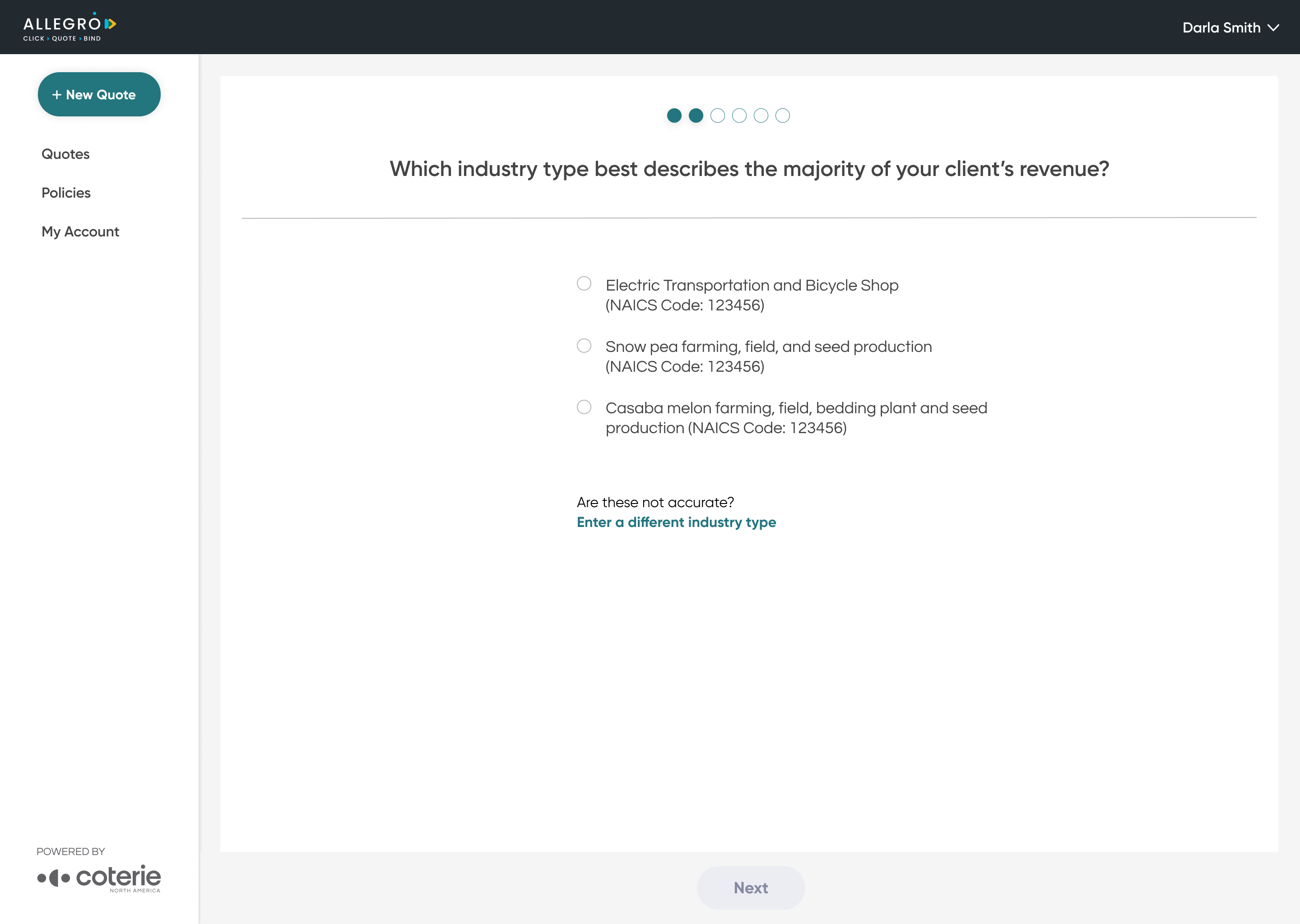
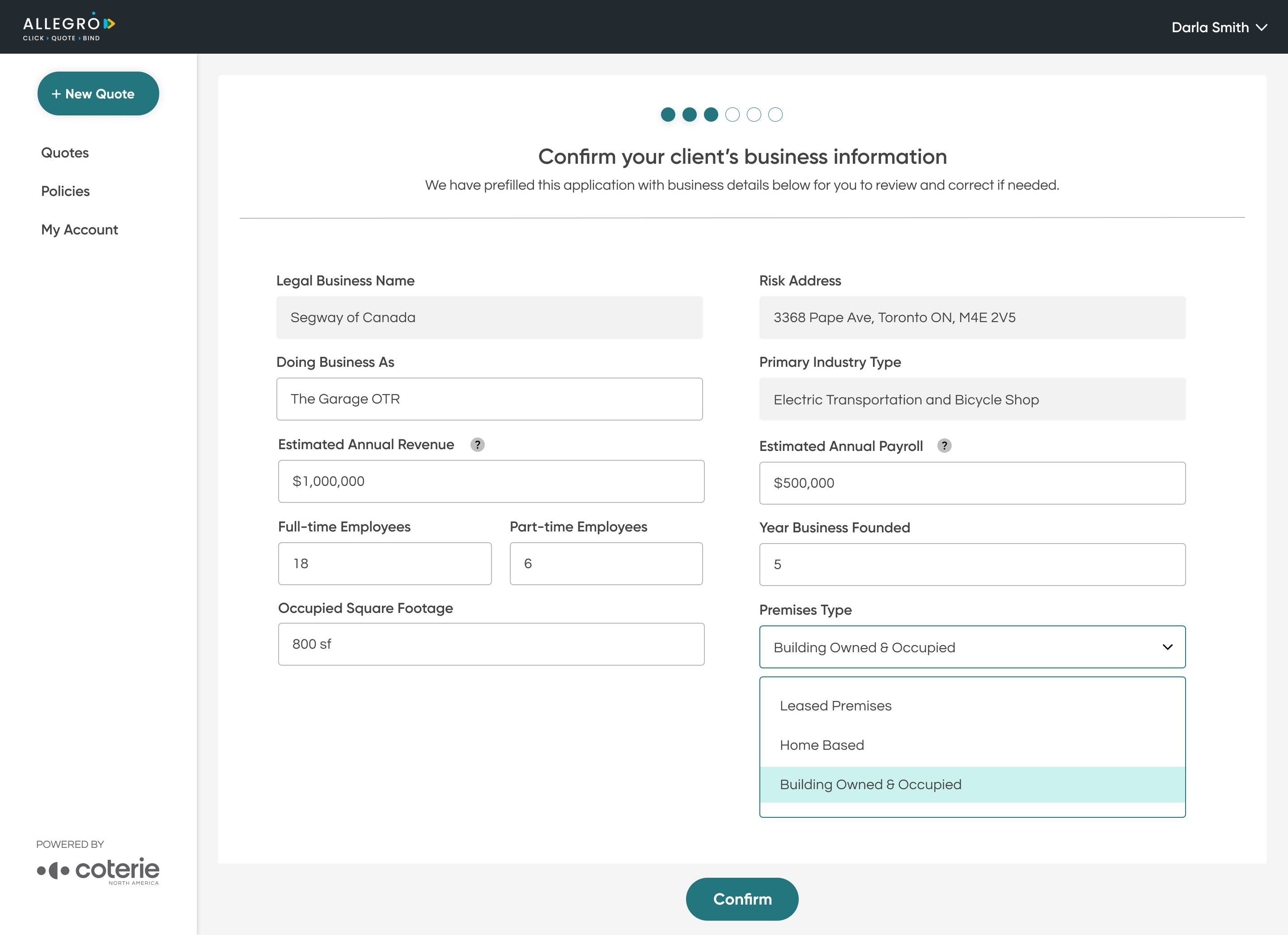
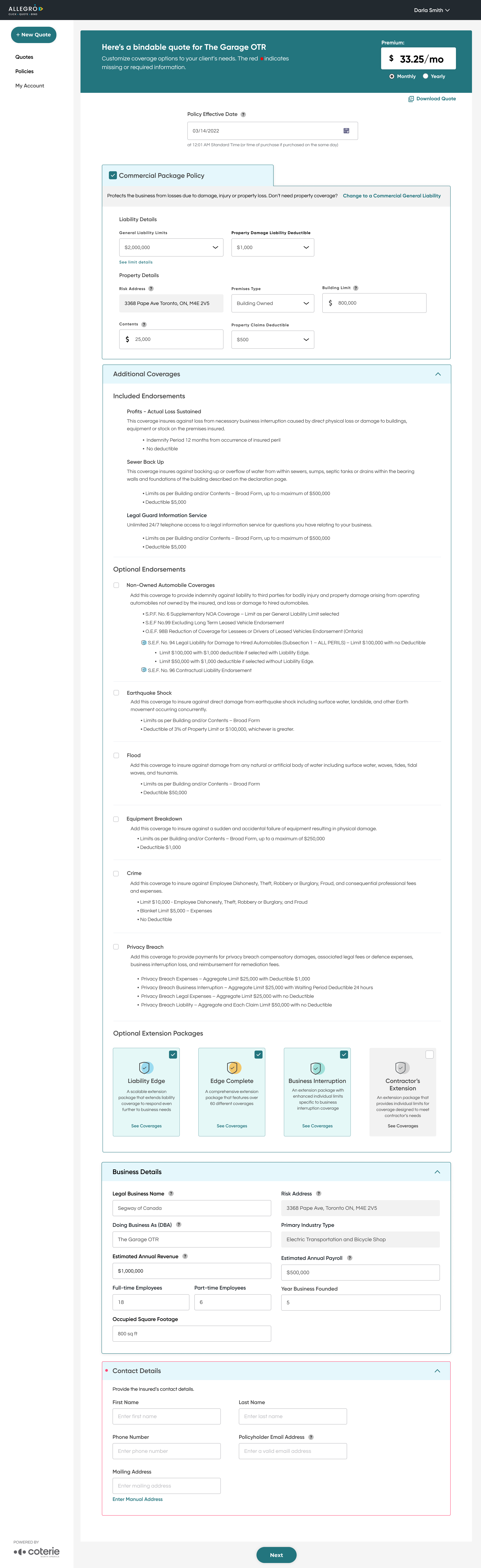
Context: Allegro is a digital quoting platform that allows brokers to quote and bind policies within minutes. Intact, one of the larges property and casualty insurance carrier in Canada, is in need of a digital solution that modernizes their processes and increase efficiency for their brokers.

Problem

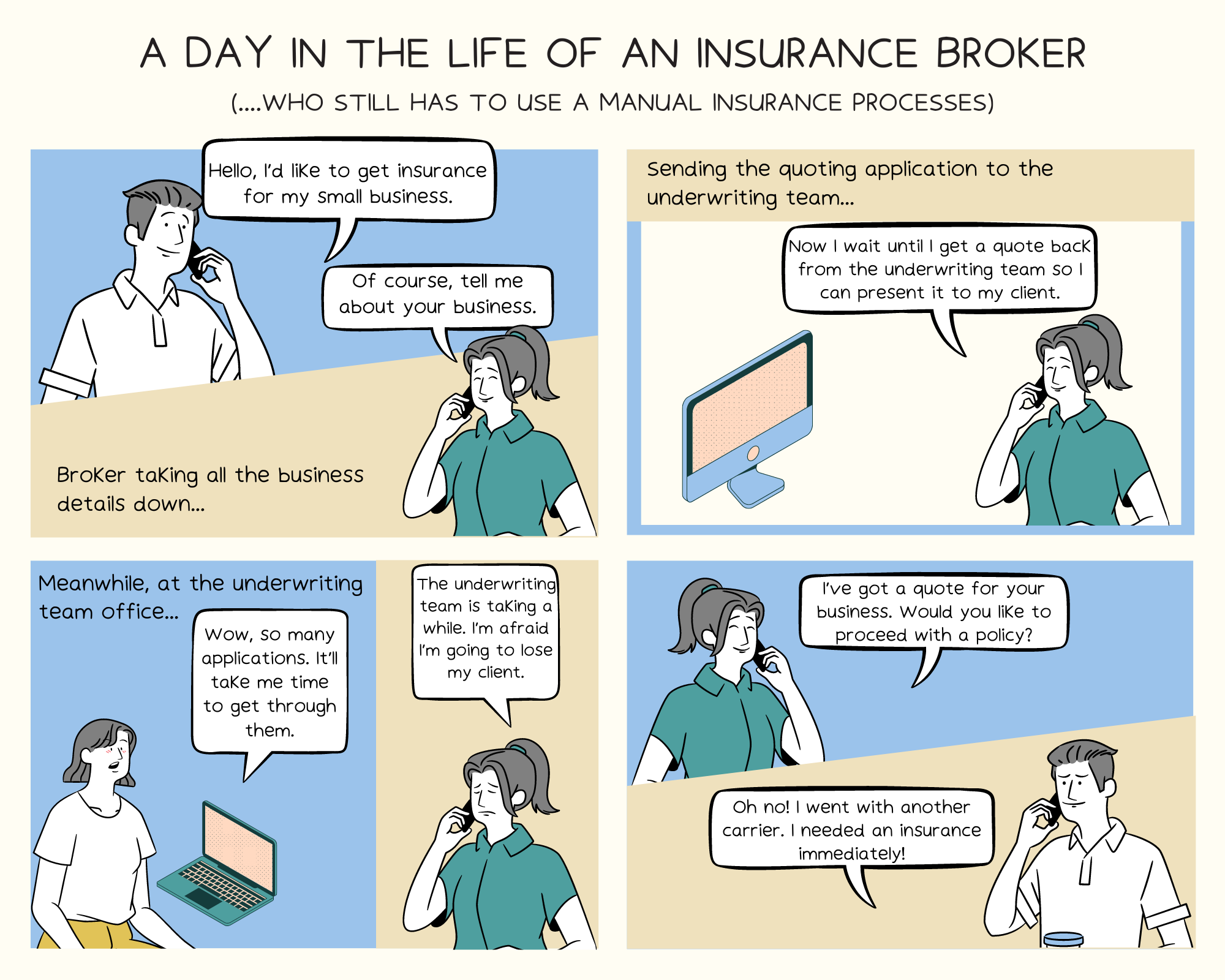
Traditional insurance process is time consuming

Brokers, our users, continue to find themselves going through a manual process, which includes using long forms and underwriting back and forth. This becomes a problem since it elongates the policy lifecycle from starting an application to presenting a quote back to the client. Compared to their competitors, they are lacking a digital quoting experience that would expedite this process much faster, which ultimately lead to user satisfaction and increased bound policies for Intact.
Note: Underwriting is the process where an insurer evaluates an applicant's risk to determine it fits within the insurer's risk appetite.
How might we help brokers get through the quoting process faster?

Define

Leveraging existing designs and core components

With the goal of creating a digital quoting and binding experience, my team was in a unique position since we were encourage to use an existing core product as a start rather than starting from scratch. My team had existing design components, systems, and baseline metrics we could use as reference as we started on our discovery process.

From this, I evaluated the existing core product's flow and launched research to understand how well it aligned with brokers’ actual workflows.

Validation

Learning through interviews

Learning from brokers' experience first-hand was very important to me as we started the research process. My PM and I conducted interviews to hear feedback from our brokers. Though the existing core product had given us a baseline success metric, I was careful with my assumptions at the beginning of our research.

I interviewed and facilitated a usability test with 2 brokers. During this feedback session, I conducted the usability test with a white labeled version of the core existing product. Our findings were:
Taking what I learned from the interviews, it was clear that brokers need a way to get reassured that the quote they're putting through the platform is correct. With the new digital quoting platform, the brokers didn't have a direct contact with the underwriting team. We uncovered that that they needed extra guidance and reassurance on which business are within the insurance's risk appetite.

New requirement becomes key user task

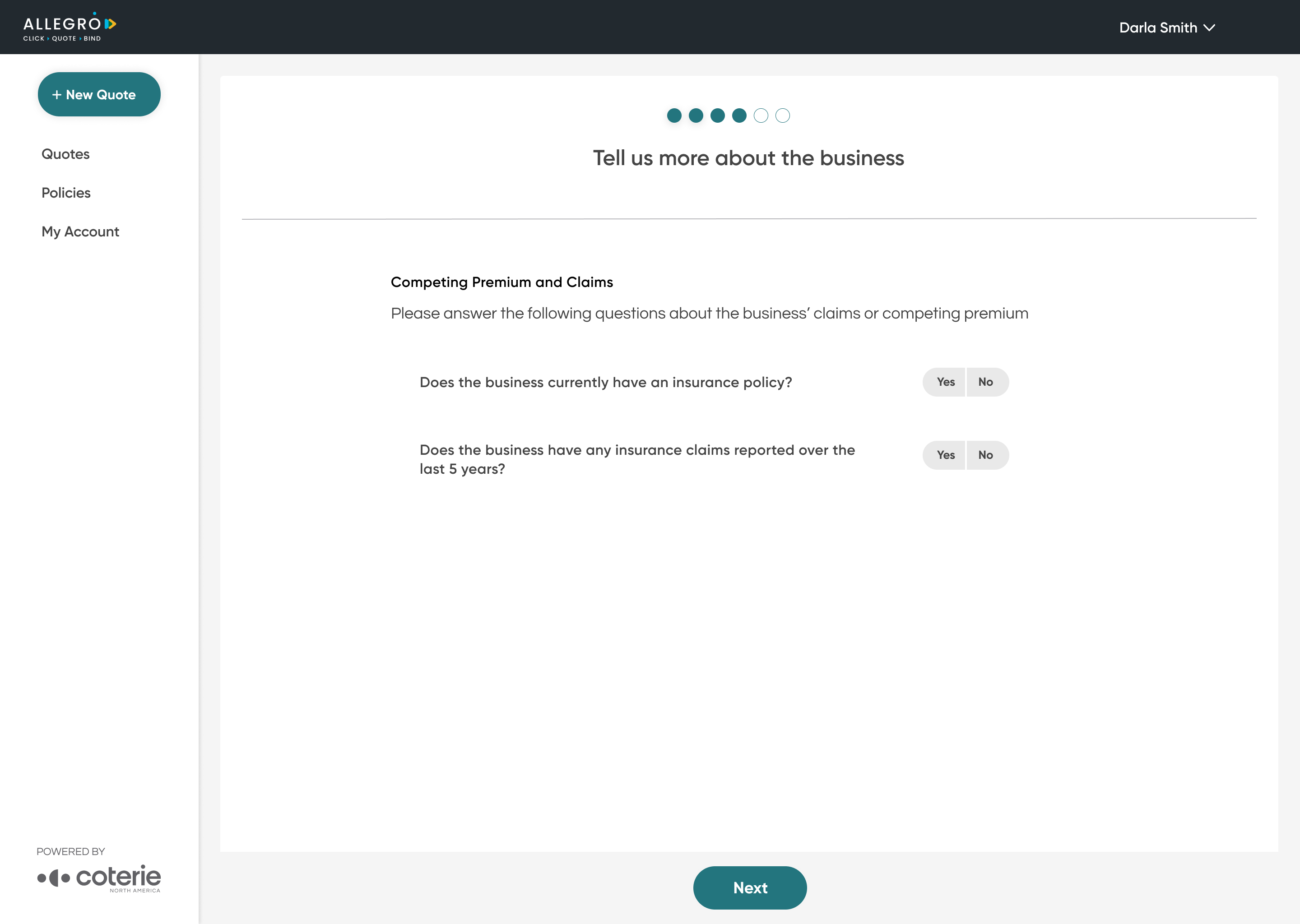
As the project developed, one business requirement that unfolded was adding underwriting questions within the flow. Thinking through this requirement, it made me pause to consider the current user flow. Though this added a new step within the flow, it supported the broker's guidance when evaluating the business' risk, making this a strong addition to the current user flow.
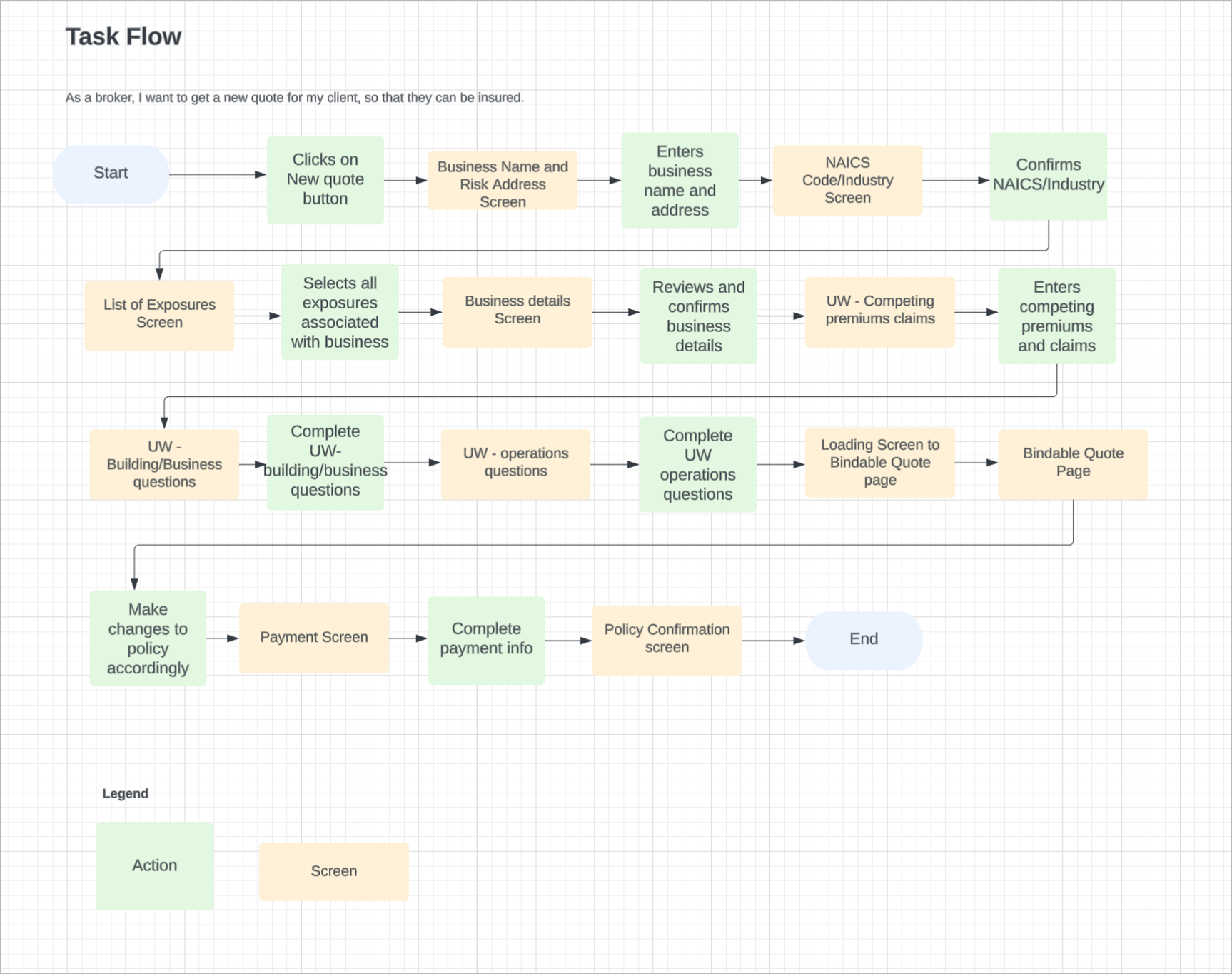
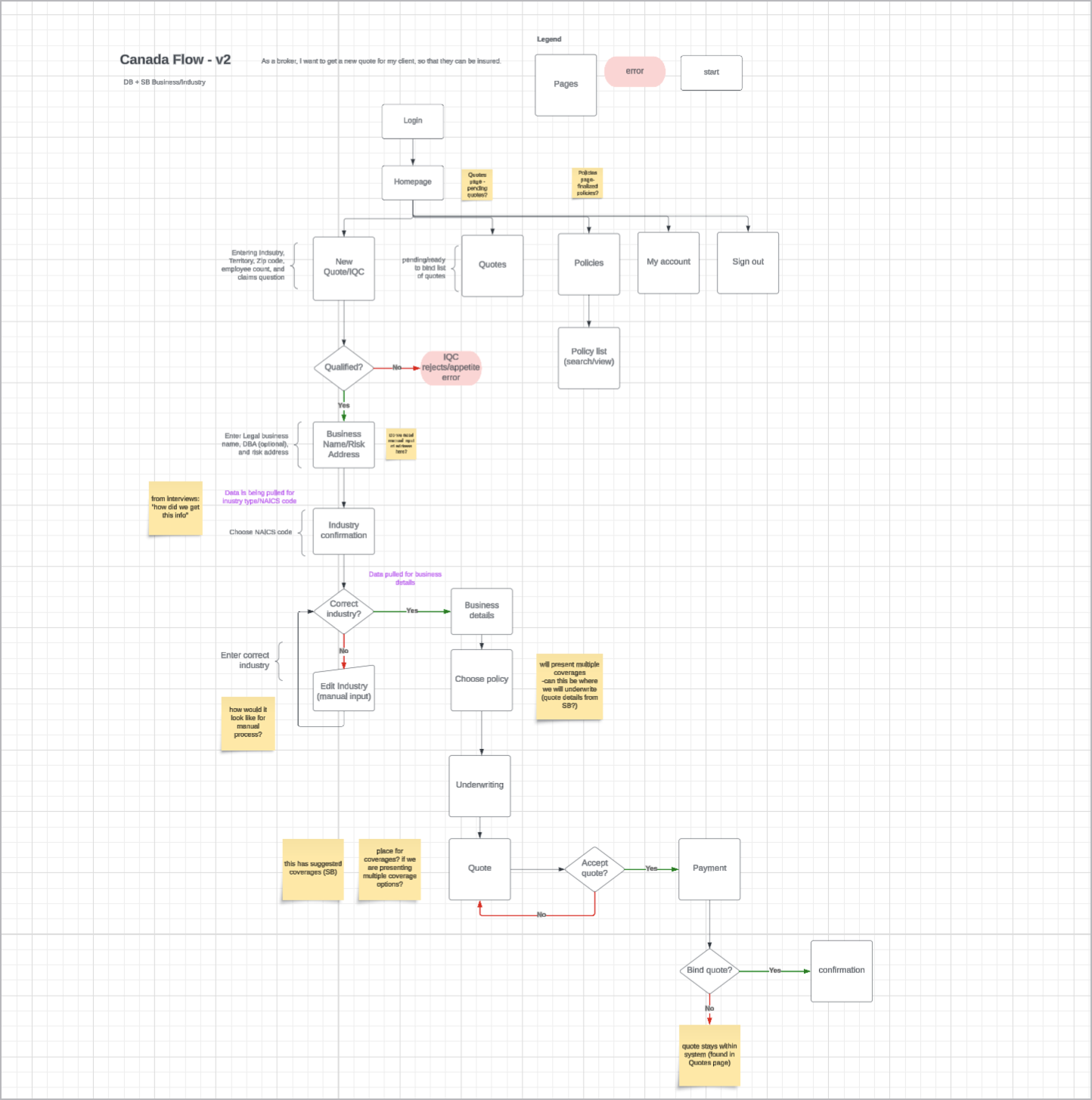
I analyzed the current user flow and architecture of the quoting process. Since this underwriting section didn't exist in. the original product, the placement of this flow needed to be strategic.

Two things I considered while thinking through the flow were: where is the best place to add the new section and how do we add it without disrupting the current flow.

Define

Assesing feasibility and business alignment

After receiving a long list of underwriting question from our stakeholders, my PM, insurance manager and I set up time to look at the common patterns that emerged from the questions. During this meeting, I wanted to get a sense of what was required. To minimize our user's mental load, I did a competitor analysis and research common long form patterns.

My key takeaways were:

Collaborating with engineering for streamlined forms

I shared with engineering my key takeaways from my long form research and review of the underwriting questions. We decided on the common outputs and the parent-child relationship of each question. Common outputs turned into UI patterns such as dropdowns, radio buttons, text fields, and yes/no selectors.

To decrease the broker's mental load, I implemented progressive disclosure for questions that had a child question. Working with the engineering during this part of the process made our work efficient as they made components out of the common outputs.
I took note down to track user behavior on this page and look for emerging UX friction. Since the form is lengthy, I anticipated some user frustration as they moved through this touchpoint. This was a metric I wanted to keep track of.

Final Designs

Pilot launch with 300+ brokers

Our team strategized a pilot launch with 300+brokers. This small set of users gave us the opportunity to monitor for potential UX friction throughout the flow.

After our pilot launch, we released Allegro to all of our users located in 8 out of 10 provinces in Canada.

Results

Revenue growth contribution and Launch day success

Throughout Allegro's time in production, our platform contributed $600k in revenue. Our platform also helped bound 590 policies.
$600k
revenue contribution
590
policies bound

Opportunities and Future fast-follows

Continuous Discovery Loops for improved experiences

After launch, my PM and I conducted post-launch interviews and heard directly from our users. This contributed to major UX fast follows and uncovered big needs from our users. A few things uncovered were:
  • Circling back to the underwriting section, I knew this was a possible point of friction. Looking through heatmaps and click maps, this could be improved.
  • A need for a new line of business/insurance offering was needed. This was a major ask from directly from our users based on the type of businesses they were quoting.

Reflection

Collaborating early with teammates

I was happy with how my team collaborated during this project. I knew the importance of collaborating and including my engineering team early so I made sure to do that during this project. As a result, we were able to lean in on each other’s expertise and delivered a solid project that positively impacted our brokers.